Uncovering Trends in Provider-Driven Innovations for Safe and Accessible Prize Pools on Handheld Devices
Skriven av Zoe Flores · 2026-10-11
Uncovering Trends in Provider-Driven Innovations for Safe and Accessible Prize Pools on Handheld Devices
Providers in the handheld gaming sector continue to develop innovations that reshape how prize pools operate on mobile platforms, with a focus on security protocols and user accessibility features that address regulatory requirements across multiple jurisdictions. Data from industry reports released in October 2026 shows increased adoption of encrypted transaction systems and adaptive interface designs that accommodate diverse user needs on smartphones and tablets.
Core Developments in Mobile Prize Pool Architecture
Software developers have shifted toward modular prize pool systems that integrate real-time verification tools, allowing operators to maintain compliance while expanding participation on handheld devices. These systems rely on cloud-based ledgers that update prize amounts instantaneously, and they incorporate biometric authentication layers to reduce unauthorized access incidents according to findings from the Canadian Centre for Gaming Research.
Studies conducted by academic teams at several European universities reveal that providers now embed accessibility standards directly into the prize pool code base, which supports screen reader compatibility and adjustable font sizes without disrupting pool mechanics. Such changes align with broader digital inclusion mandates that took effect in various markets during 2025 and 2026.
Safety Protocols Driving Recent Innovations
Security enhancements include multi-factor authentication tied to device hardware, combined with anomaly detection algorithms that flag irregular betting patterns before they affect prize distribution. Providers report that these measures have lowered dispute rates by measurable margins, as documented in a 2026 analysis from the Australian Communications and Media Authority.
Encryption standards have evolved to include end-to-end protocols specifically calibrated for smaller screen environments, where users often complete transactions in public settings. Researchers note that handheld-specific adaptations prevent data leakage during prize claims, and they integrate with existing regulatory frameworks in North America and the Asia-Pacific region.
Accessibility Features Expanding Reach
Interface adjustments now allow prize pool displays to adapt automatically to user preferences for color contrast and gesture controls, which benefits individuals with motor or visual impairments. Providers have introduced voice-command options for pool participation that maintain the same security thresholds applied to touch-based inputs.
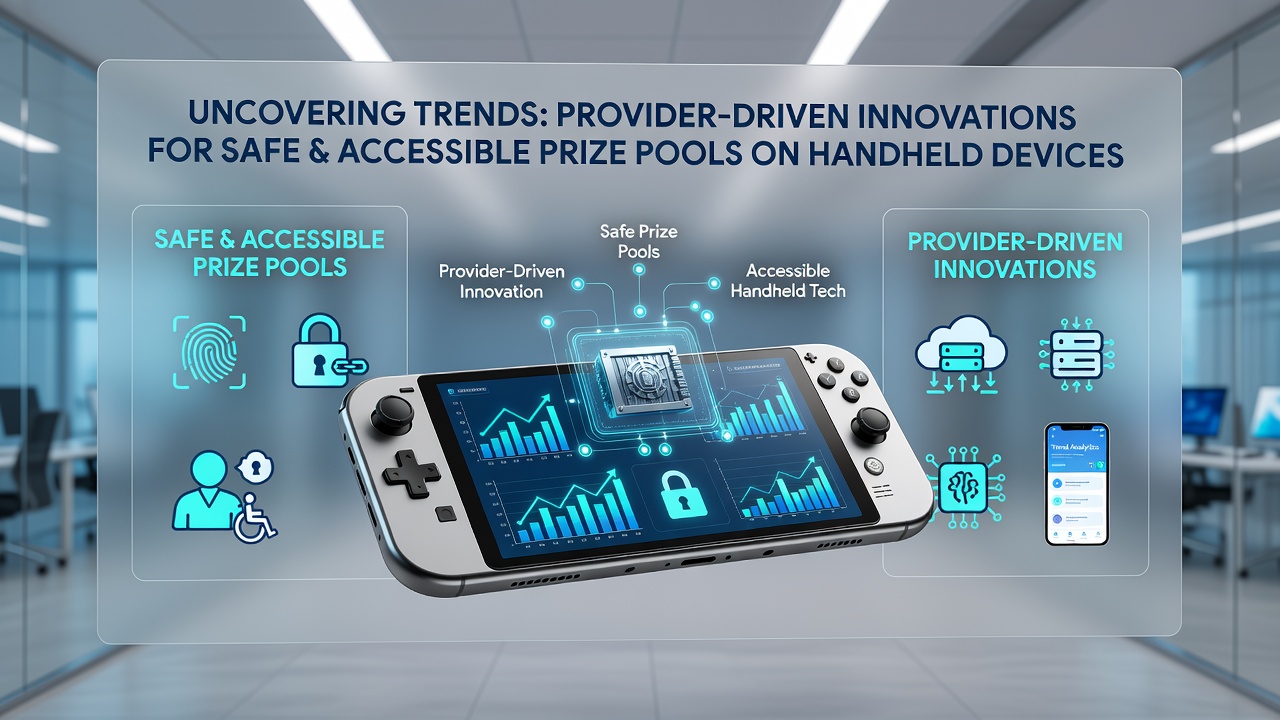
Language localization tools have expanded to cover additional dialects and regional terminology, while simplified navigation paths reduce the number of steps required to view or claim winnings. Observers at the 2026 Mobile Gaming Summit highlighted how these provider-led updates align with international accessibility guidelines without increasing processing latency.
Data Trends Emerging in October 2026
Market figures released that month indicate a 28 percent rise in handheld prize pool transactions compared with the prior year, driven largely by providers who implemented unified safety and accessibility upgrades. Cross-border operators have adopted standardized reporting formats that allow regulators in different regions to track pool integrity more efficiently.
Case examples from North American and European providers demonstrate how integrated dashboards give users clearer visibility into contribution rates and payout probabilities, all while preserving encryption standards. These tools emerged from collaborative efforts between software firms and accessibility advocacy groups that began testing prototypes in late 2025.
Provider Strategies for Sustained Implementation
Companies have begun embedding machine learning models that predict user interaction challenges on various device models, then adjust prize pool interfaces accordingly before deployment. This proactive approach reduces post-launch modifications and supports consistent performance across operating systems.
Partnerships with hardware manufacturers have produced optimized chip-level security features that handle prize calculations locally on the device, which minimizes reliance on constant network connectivity. Data compiled by research institutions shows these local processing methods maintain compliance with data protection rules in multiple jurisdictions.
Conclusion
Provider-driven changes continue to influence how prize pools function on handheld devices through combined safety mechanisms and accessibility enhancements that respond to regulatory and technical demands. Figures released in October 2026 confirm measurable growth in secure mobile participation, while ongoing development focuses on seamless integration of verification and adaptive design elements. These trends reflect coordinated efforts across software development, regulatory compliance, and user-centered engineering that shape the current landscape.